Book Review
Author: Mel Lindauer, Taylor Larimore, Michael LeBoeuf
Year of publication: 2014
Build lasting wealth the smart, simple, and disciplined way—low-cost, diversified, and designed for long-term success.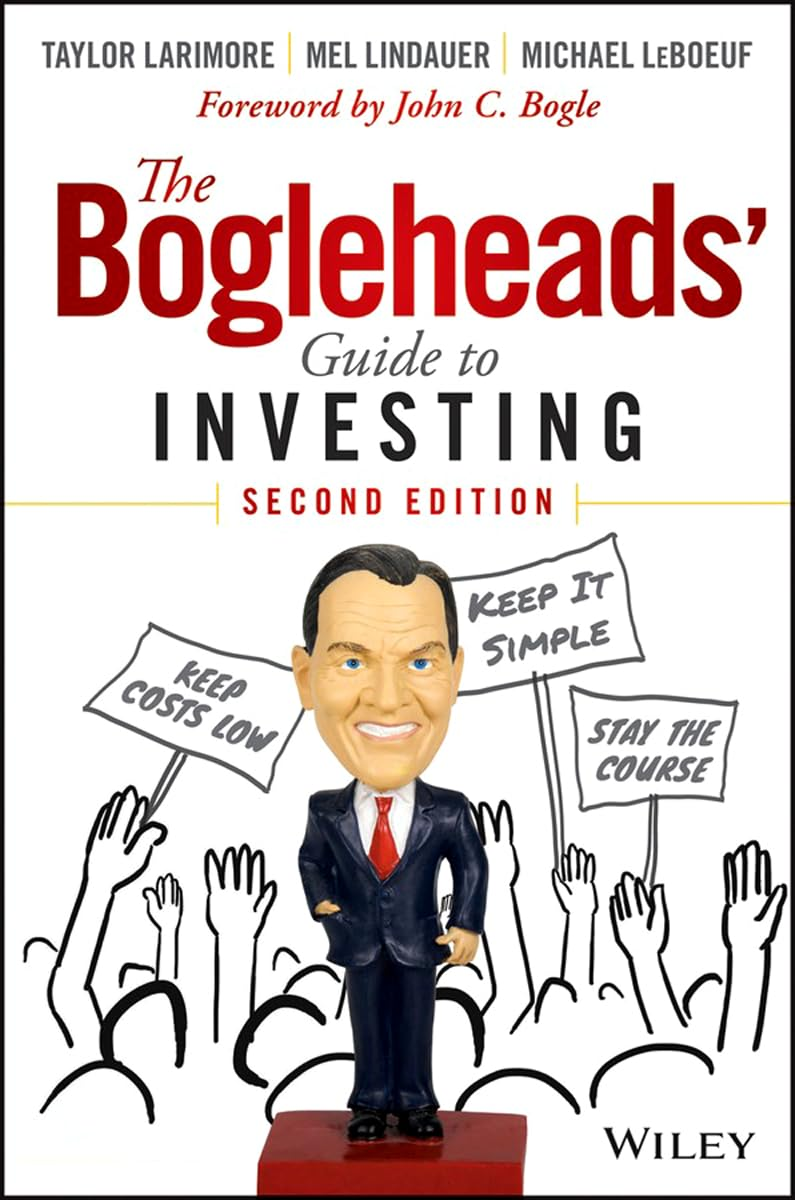
The Bogleheads’ Guide to Investing is written for everyday people who want to build wealth sensibly without turning investing into a full-time job. It’s ideal for beginners—those who may feel overwhelmed by financial jargon, market noise, or the endless stream of “hot tips” and complicated strategies online. The authors designed it to teach the fundamentals in plain language, helping readers understand how to save, invest, and protect their money using simple, proven principles rather than speculation.
It’s also a great fit for working professionals who want a long-term, low-stress approach to managing their finances. The book’s core message—keep costs low, diversify broadly, and stay disciplined—resonates with people who value stability and independence over chasing quick gains. Many readers use it as a roadmap for setting up retirement plans, understanding index funds, and structuring portfolios that don’t need constant attention.
For those already somewhat familiar with investing, the book serves as a refresher and reality check. It reinforces timeless investing wisdom and helps filter out the noise of financial media and emotional decision-making. Whether you’re in your 20s starting your first 401(k), in mid-career trying to optimize your savings, or nearing retirement and wanting peace of mind, The Bogleheads’ Guide to Investing offers a clear, disciplined framework to build and maintain long-term wealth.
Readers generally praise The Bogleheads’ Guide to Investing as an exceptionally clear, user-friendly introduction to investing. Many note that the authors break down complex topics (like taxes, asset allocation, fund selection, rebalancing) in straightforward language, making it accessible even if you don’t have much financial background. The advice is often described as practical: readers say the book gives them concrete steps to act on—not just theory—such as choosing low-cost funds, keeping fees small, and resisting market timing.
A frequently mentioned strength is that it makes readers feel more confident in investing. Some say that after reading, they understood enough to begin investing or revise their portfolio, whereas before they felt unsure. Many like that the book reinforces core principles rather than introducing fads or overly complex strategies.
Still, a common caveat is that much of the content is tailored to U.S. laws, tax rules, retirement accounts (IRAs, 401(k)s, etc.), which limits direct usefulness for readers outside the U.S. Those readers may need to map the lessons to their local systems. Some also say the book occasionally repeats ideas for emphasis, which a few find redundant. Finally, for seasoned investors or those looking for deeper technical strategies, the book might feel a bit elementary—serving better as a solid foundational or reference work than a cutting-edge advanced guide.
The Bogleheads’ Guide to Investing is about building long-term wealth through simple, disciplined, and low-cost investing. Inspired by the philosophy of John C. Bogle—the founder of Vanguard and pioneer of index funds—the book teaches readers how to create an investment plan that prioritizes consistency and common sense over speculation or market timing.
At its core, the book promotes the idea that successful investing doesn’t require picking individual stocks or trying to outsmart the market. Instead, it emphasizes using diversified, low-fee index funds that track the market’s overall performance. The authors explain how to allocate assets across stocks, bonds, and cash, rebalance periodically, and stay the course through market ups and downs.
Beyond investing mechanics, the book also covers essential financial habits like saving early, managing debt, minimizing taxes, and understanding risk. It walks readers through retirement planning, insurance, and estate basics—making it a complete guide to personal finance, not just investing.
Ultimately, The Bogleheads’ Guide to Investing is about empowering individuals to take control of their financial future. It teaches that patience, simplicity, and discipline—not complexity or luck—are the real keys to financial independence.
Keep Investing Simple – Avoid complicated strategies or constantly chasing the latest market trends. Stick to straightforward approaches that are easy to understand and manage.
Use Low-Cost Index Funds – Rather than picking individual stocks or actively managed funds, focus on low-fee index funds that track the overall market for steady long-term growth.
Minimize Fees and Taxes – Investment costs and taxes can significantly reduce returns. Prioritize low-cost funds and tax-efficient strategies to maximize what you keep.
Don’t Try to Beat the Market – Trying to time the market or pick winners usually fails. Matching the market through broad diversification is more reliable over time.
Create and Follow a Clear Investment Plan – Define your goals, risk tolerance, and strategy. Stick to your plan even during market ups and downs to avoid impulsive decisions.
Save Early and Consistently – Start investing as soon as possible and contribute regularly. Compounding works best over long periods, turning small contributions into substantial wealth.
Diversify Across Asset Types – Spread investments across stocks, bonds, and international markets to reduce risk and avoid overexposure to any single asset.
Rebalance Your Portfolio – Periodically adjust your holdings back to your target allocation to maintain the desired risk level and stay on track with your plan.
Stay Disciplined and Avoid Emotional Decisions – Markets fluctuate, but decisions based on fear or greed can harm long-term returns. Consistency and patience are key.
Focus on What You Can Control – You can’t control market movements, but you can control your savings rate, investment costs, and behavior, which have a major impact on outcomes.
Think Long Term – Wealth-building is a marathon, not a sprint. Maintain a long-term perspective and resist the urge for quick gains.
Protect Your Wealth – Use tax-advantaged accounts, insurance, and estate planning to preserve and safeguard what you build over time.